

A not for profit organisation
Since its establishment in 1983, the Lions Eye Institute has become a global centre for ophthalmological care and first-class scientific research into the prevention of blindness.
You can expect to be treated with kindness and courtesy when you visit us. Our goal is to make your visit to the Lions Eye Institute clinic as pleasant and informative as possible.
We invest in world-class medical research and its translation into clinical practice in metropolitan, rural and remote Western
Australia.
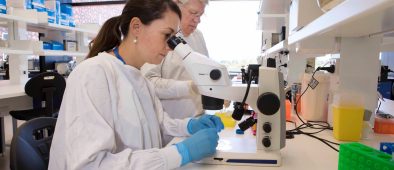
8 October 2026 Researchers from the Lions Eye Institute and University of Melbourne have developed a new gene therapy that’s …

When we last caught up with Morland Smith, the 88-year-old runner was getting ready for the World Masters Athletics Championships …
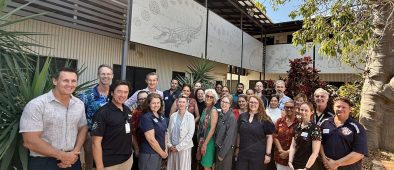
In September 2026, National Health and Medical Research Council (NHMRC) leaders visited the Kimberley Hub to see our service delivery …

Dr Danuta Sampson, senior researcher at Lions Eye Institute, has been named one of eight finalists for the 2026 Marie …

Professor Allison McKendrick has been elected President of the Imaging and Perimetry Society (IPS) — the first woman to lead …
Imagine looking at the world through an analogue television that can't quite find its signal. A constant visual "static" overlaying …
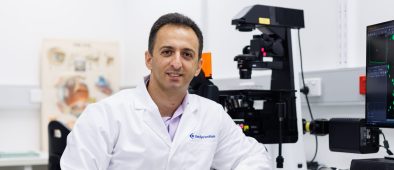
Date: Friday 23 October 2026 Location: Murdoch University, Perth, Western Australia, and online In the lead-up to Epidermolysis Bullosa (EB) …

Registrations are now open for an upcoming Inherited Retinal Disease Patient Day, hosted by the Lions Eye Institute in collaboration …

31 January - 3 February 2027 University of Western Australia, Perth, WA, Australia Mark your calendars for the Australia and …

Date: TBC (Expression of Interest open) Location: Online event Do you live with Visual Snow Syndrome (VSS)? Researchers from The …

2026 Miocevich Lecture: Hidden aspects of eye disease Wednesday, 15 July 2026 - 5:30pm | Proudly supported by the Miocevich …
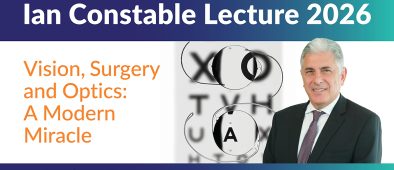
The 2026 Ian Constable Lecture, presented by Emeritus Professor Graham Barrett AM, celebrates innovation and vision science With more than …