
The stem cell robot at the Lions Eye Institute continues to unlock new discoveries about inherited retinal diseases (IRDs).
Acquired in 2023, thanks to support from the Channel 7 Telethon Trust and Mrs Rhonda Wyllie, the robot has proven invaluable to the research of the Ocular Tissue Engineering Laboratory (OTEL) here at the Institute, which is overseen by Associate Professor Fred Chen, retinal specialist and Director of Research at the Institute.
The stem cell robot has made it possible to automate the process of reprogramming patient cells to become stem cells, which involves carefully controlling the cells’ environment and culture conditions. In doing so, the robot delivers a level of precision and stability that would otherwise be incredibly labour-intensive.
As a result, Dr Samuel McLenachan, senior laboratory research scientist at the Lions Eye Institute, and his team have been able to successfully reprogram cells from patients with Usher syndrome and Stargardt disease into stem cells. By doing so, the OTEL team can gain a deeper understanding of the cell mutations that contribute to these IRDs.
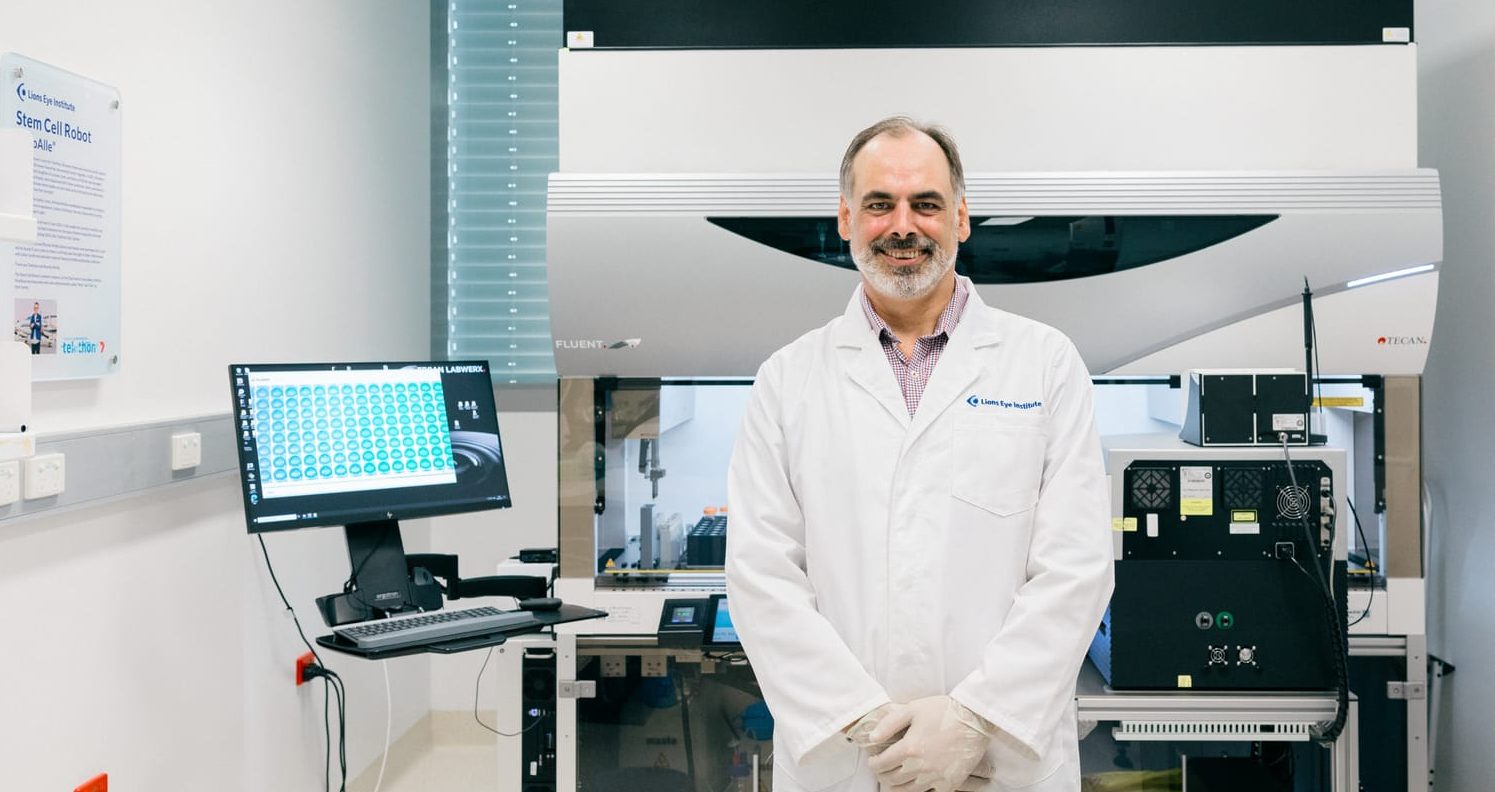
Dr Samuel McLenachan, senior laboratory research scientist at the Lions Eye Institute, with the stem cell robot
Additionally, the SPARK Cyto 600 multimodal imager, which the Institute acquired at the end of 2025 thanks to the generosity of our supporters, John and Lee Saleeba, has greatly improved the process by which stem cells are assessed and validated after reprogramming. By working alongside the stem cell robot, the SPARK Cyto’s automated imaging enables the routine monitoring of cell cultures and a wide range of cellular and molecular tests. These tests are essential for the OTEL’s high-throughput stem cell production and drug screening activities.
The system is already yielding results, with a screening of 277 antioxidant drugs identifying three promising candidates for further testing as potential treatments for RCBTB1-associated retinopathy, a rare IRD that causes the retina to gradually stop working.
Finding a treatment could mean slowing or even stopping the progression of vision loss caused by the disease.


