
The Perron Paediatric Retinopathy Initiative at the Lions Eye Institute was created to change this trajectory. Established in 2021 through the generous support of the Stan Perron Charitable Foundation, the programme is developing safer, earlier and more child-friendly ways to detect diabetes-related complications before permanent harm occurs.
Led by Professor Chandra Balaratnasingam and Professor Dao-Yi Yu AM, the Initiative brings together paediatric eye screening, advanced retinal imaging, laboratory discovery and collaborations with specialists in childhood diabetes, kidney disease and biomedical image analysis. This year, the programme enters an important new phase – moving beyond the detection of diabetic eye disease alone towards the earlier identification of multi-system complications in children.
Turning an eye test into a whole-child health signal
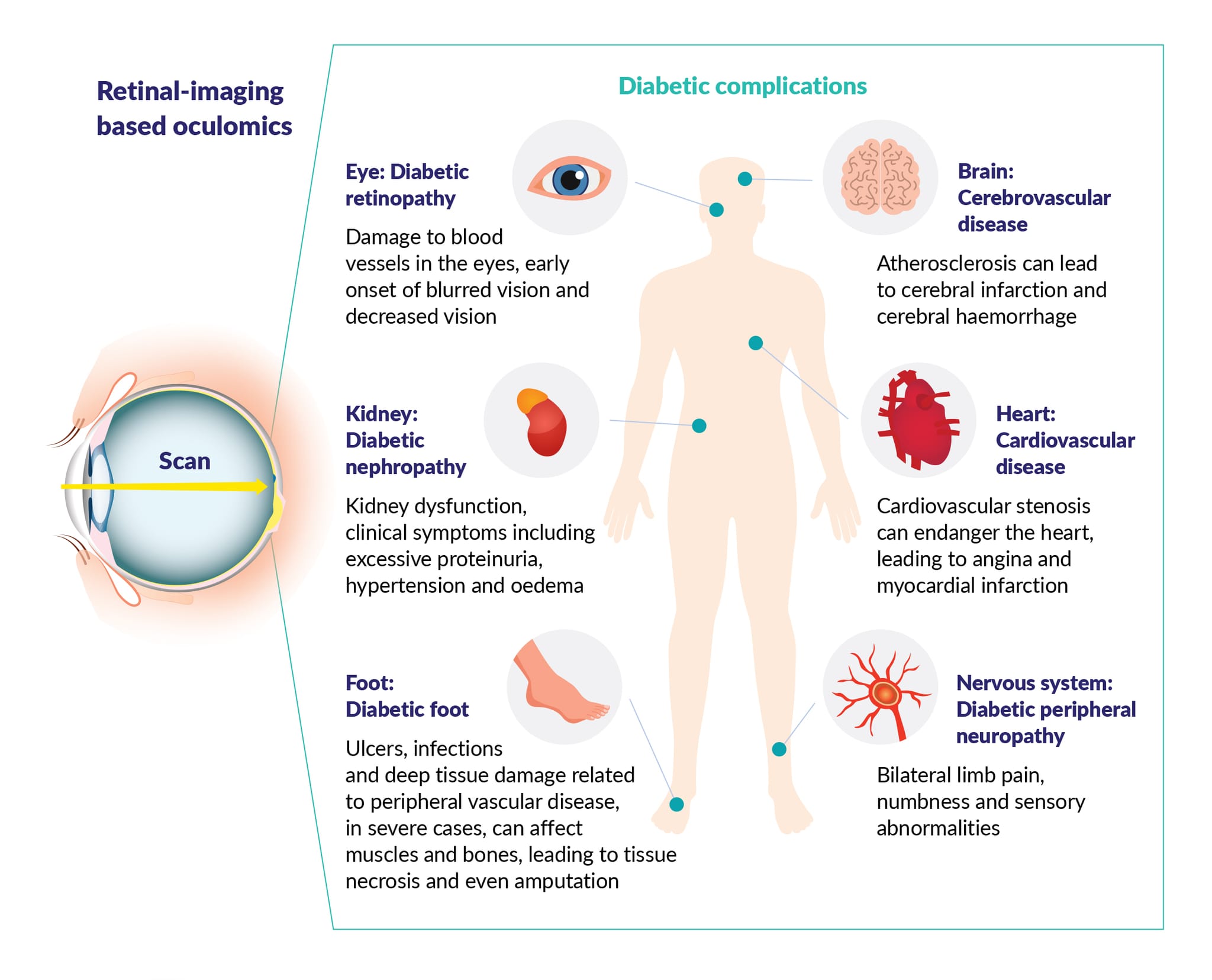
Children with diabetes already undergo eye screening to detect diabetic retinopathy. The Perron Paediatric Retinopathy Initiative is building on this familiar clinical pathway by asking whether more detailed retinal imaging can reveal earlier signs of injury across the body.
Using advanced optical coherence tomography (OCT) and optical coherence tomography angiography (OCTA) equipment, the Lions Eye Institute team can examine retinal nerve layers and microscopic blood-flow patterns in a matter of seconds. A major focus is the inner plexiform layer, a region of the retina with high energy demand that appears especially vulnerable to the metabolic stress of diabetes. The team is investigating whether subtle changes in this layer, together with alterations in blood flow and oxygen supply to the retina, can identify children at increased risk before diabetic retinopathy becomes visible on standard photographs.
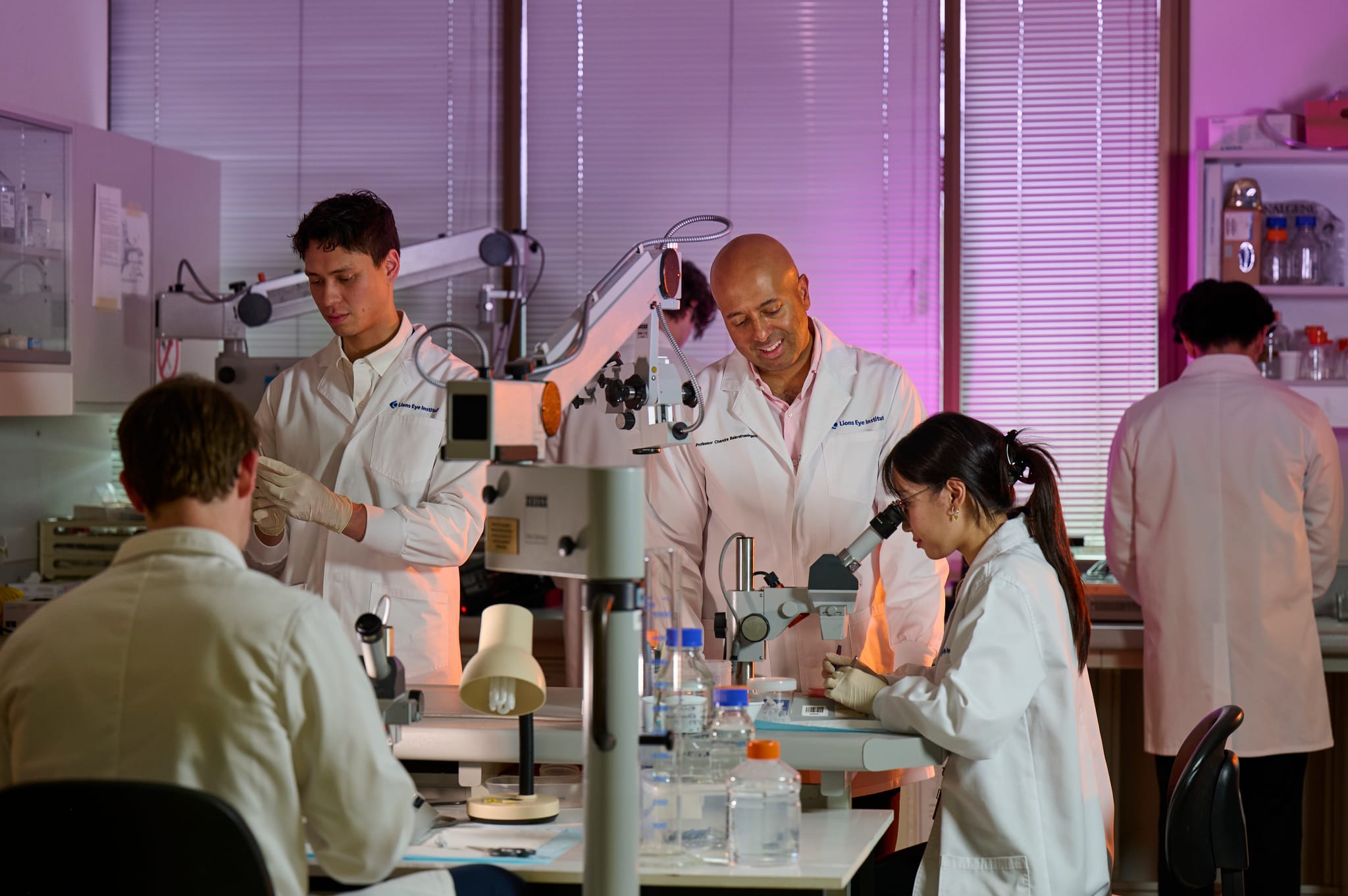
Perron Paediatric Retinopathy Initiative researchers at the Lions Eye Institute are moving beyond the detection of diabetic eye disease alone towards the earlier identification of multi-system complications in children
New technology for a new era of screening
A major milestone this year has been the arrival of the BMizar 400 kHz OCT/OCTA scanner at the Institute. This is the first system of its kind in Australia. Made possible through the continued generosity of the Stan Perron Charitable Foundation, this technology represents an important advance for both patient care and research.
The BMizar can capture up to 400,000 scans per second, producing highly detailed three-dimensional images of the eye. It allows clinicians and researchers to visualise structures at the front and back of the eye, and to assess retinal blood flow without invasive dye or contrast injections. For children, this means scans that are rapid, painless and often possible without dilating drops.
For the Perron Paediatric Retinopathy Initiative, the significance is profound. Higher-quality imaging will allow the team to detect smaller and earlier changes in retinal structure and blood flow. It will strengthen screening, improve research precision, and help accelerate the development of retinal biomarkers that may predict broader diabetes complications before they become clinically apparent.
Detecting complications before they become lifelong problems
Current diabetes care often requires separate investigations for different organs, such as eye checks, urine tests, blood tests, kidney assessments and specialist reviews. For children and families, this can mean repeated appointments, missed school, travel, discomfort and anxiety.
The Perron Paediatric Retinopathy Initiative is working towards a more integrated model. By linking retinal imaging with the Western Australian Children’s Diabetes Database, researchers can compare eye scan findings with detailed information on blood glucose control, blood pressure, kidney function, lipid profile and other markers of systemic health. The aim is to determine whether retinal changes can act as an early biological signal of broader diabetic injury.
If successful, this approach could help clinicians identify which children need closer monitoring, earlier intervention or more personalised care. It may also reduce unnecessary referrals and invasive testing for children at lower risk. For families in regional and remote Western Australia, a rapid, non-invasive scan that helps guide multi-organ risk assessment could make specialist care more accessible and less disruptive.
Expanding the team for the next phase
 |
The clinical strength of the Perron Paediatric Retinopathy Initiative continues to grow. Professor Balaratnasingam (pictured top) and Dr Antony Clark (pictured middle) have led the paediatric diabetic retinopathy screening programme at the Lions Eye Institute since its establishment. This year, Dr Benjamin Host (pictured bottom) joins the Initiative as a new ophthalmologist in the programme, adding further paediatric ophthalmology expertise at a critical stage of expansion.
Dr Host will contribute to participant recruitment, clinical assessment and the care of children undergoing screening. His involvement strengthens the programme’s capacity as it broadens from eye screening alone into a research platform designed to improve long-term health outcomes for children with diabetes. |
 |
|
 |
Designed with families, not just for families
Families have played an important role in shaping the direction of the Initiative. Through consumer consultation, parents and carers described the burden of repeated testing, the emotional weight of long-term uncertainty and the fear of complications such as blindness and kidney failure.
Their priorities are clear – earlier answers, fewer invasive tests, less disruption, and care that reflects the realities of childhood and family life. This feedback has helped guide the next phase of the programme, including the emphasis on a single, child-friendly retinal imaging test that could provide information relevant to multiple organs.
From early detection to prevention
The long-term vision of the Perron Paediatric Retinopathy Initiative is to shift diabetes care from reacting to complications after they appear to identifying risk early enough to prevent them.
This work also connects the Lions Eye Institute to a broader international effort to prevent diabetes-related vision loss. Professor Balaratnasingam is an investigator in the Moonshot Initiative which is an international collaboration involving Breakthrough T1D and the Mary Tyler Moore Vision Initiative, aimed at developing paradigm-shifting strategies to prevent diabetic vision loss.
For children, the ultimate goal is fewer complications, fewer invasive tests, better targeted care and healthier lives. For Western Australia, the programme offers a scalable model that could improve diabetes care in metropolitan, regional and remote settings.
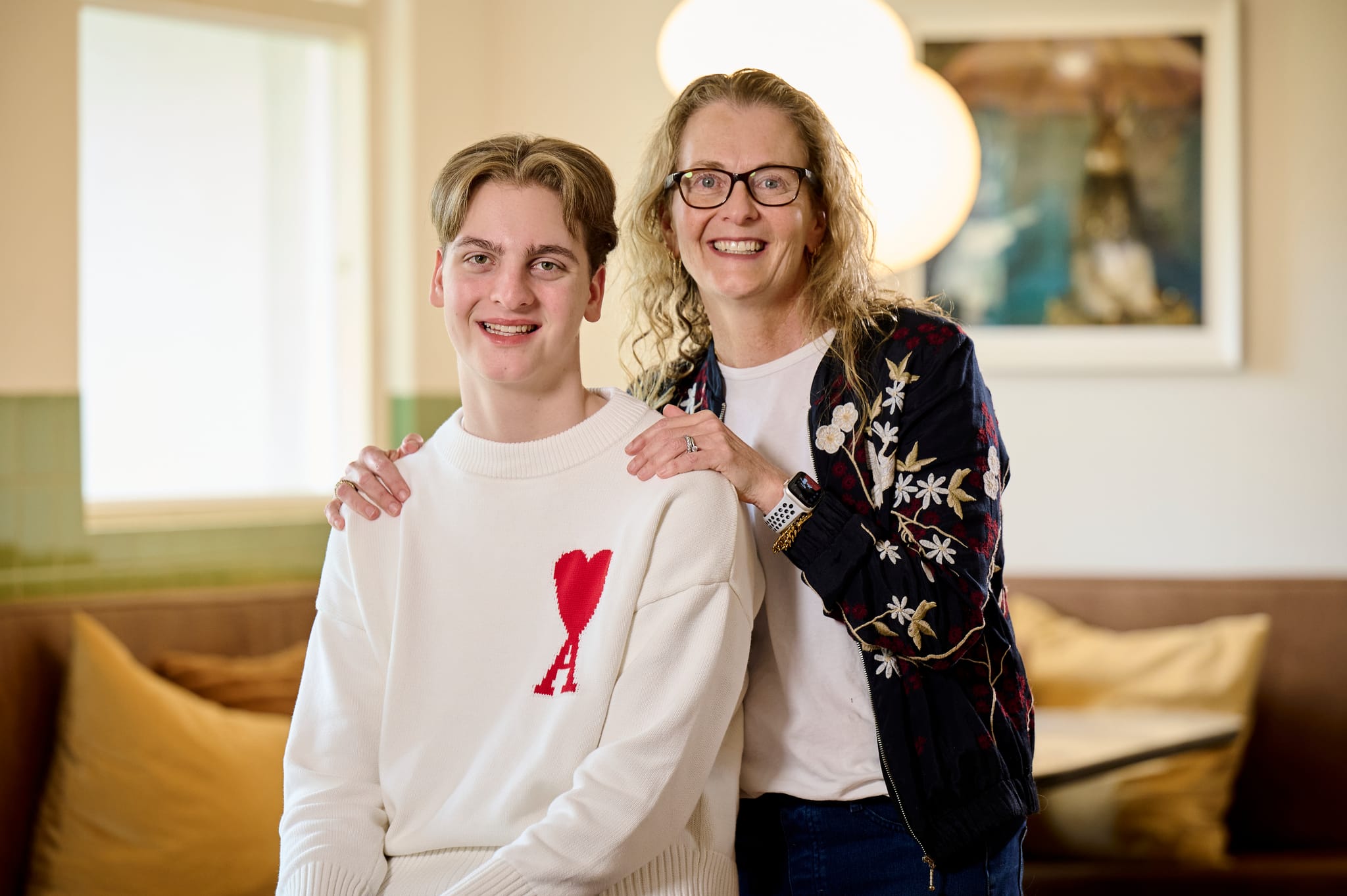
Finn and his Mum Ondine. Finn was diagnosed with Type 1 diabetes at three years of age
The Lions Eye Institute extends its sincere gratitude to the Stan Perron Charitable Foundation for its support of the Perron Paediatric Retinopathy Initiative.

We also acknowledge support from Roche Pharmaceuticals, Bayer Pharmaceuticals, Perth Eye Foundation, the Department of Health in Western Australia and the WA Child Research Fund, funded by the Western Australian Government and the Channel 7 Telethon Trust towards this program of research.
Their generosity is enabling a programme that combines advanced science, compassionate care, world-class imaging technology and family partnership with the shared goal of protecting the sight, health and future of children living with diabetes.

