
Myopia, or short-sightedness, is the leading cause of vision impairment in children globally.
When the eye grows too long from front to back, distant objects become blurry. But the real concern is what comes later: a longer eye significantly increases the risk of serious complications, including retinal detachment, glaucoma, and myopic maculopathy. An estimated 25 to 30 per cent of adults in Perth currently have myopia, with projections suggesting half the world’s population could be affected by 2050.
The Lions Eye Institute’s groundbreaking research into childhood myopia is led by Professor David Mackey AO, a founding member of the international Consortium for Refractive Error and Myopia in Children (CREAM-kids). Working with postdoctoral research fellow Dr Gareth Lingham, the team has created eye growth charts – published in JAMA Ophthalmology – that track children’s eye development against age, sex, and region-specific benchmarks, much like monitoring height and weight. This paper highlights major regional differences showing that children in East Asia – where myopia rates reach 80% in school leavers – have much longer eyes from an early age, putting them at higher risk of vision loss.
Professor Mackey’s research shows that rising myopia rates are being driven by children spending less time outside, with increased screen time as a contributing factor. The reason is simple but powerful – natural sunlight is up to 1,000 times brighter than artificial lighting. In an office environment, there are only a few hundred lux (units of brightness), but outdoors that measurement reaches tens of thousands. This brightness exposure appears to protect developing eyes. Health experts now recommend children spend at least two hours outdoors daily, even in winter. When the UV index is three or above, follow SunSmart recommendations to protect their eyes and skin.
| Without intervention, projections suggest half of all Australians could be short-sighted by 2050. But Professor Mackey’s and Dr Lingham’s research offers an evidence-based solution. Prevention is achievable through simple, everyday habits – getting children outdoors for at least two hours daily is as effective as it is accessible. This finding transforms myopia from an inevitable health burden into a largely preventable condition.
Lincoln (pictured) wears glasses, like millions of Australian children. Myopia may seem like a simple case of needing glasses, but the long-term stakes are high. Early intervention and prevention can reduce the risk of sight-threatening complications later in life. |
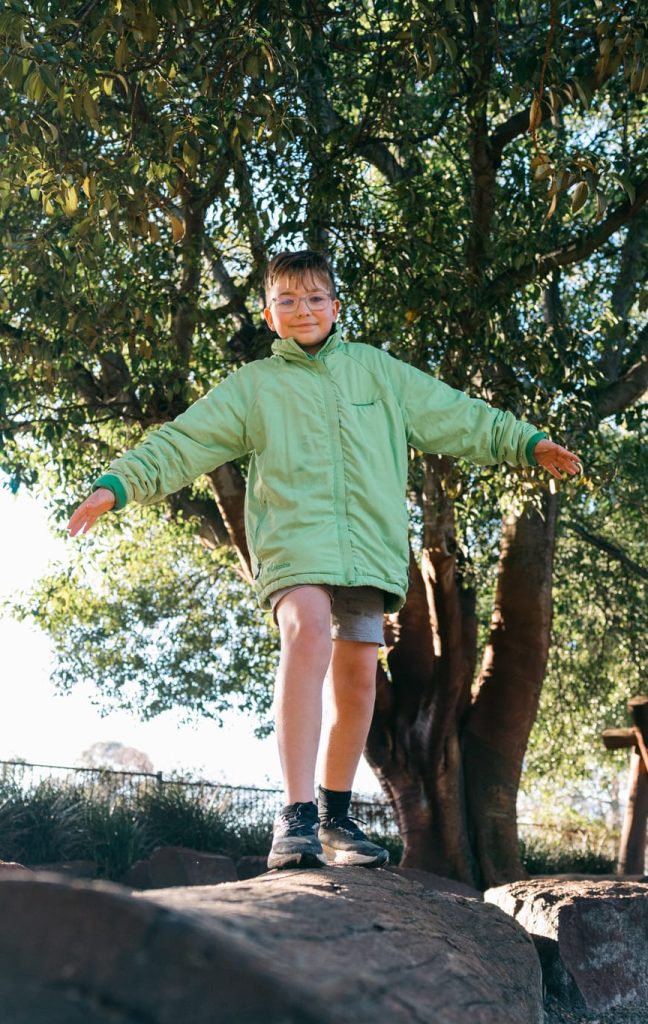 Lincoln wears glasses, like millions of Australian children. |
By supporting the Lions Eye Institute on Medical Research Giving Day, you can help researchers like Professor Mackey turn their expertise into practical advice families can use now, while helping create even better options for the next generation.

