
8 October 2026
Researchers from the Lions Eye Institute and University of Melbourne have developed a new gene therapy that’s offering fresh hope for patients living with KCNV2 retinopathy, an incurable eye disease.
Inherited retinal disease is the umbrella term for a range of degenerative eye conditions that collectively represent the leading cause of blindness in working-age adults, affecting one in 1,380 Australians and millions of people globally.
Inherited retinal disease is caused by genetic mutations that lead to the breakdown of the light-sensing cells in the retina.
Of the 500 known genes involved in inherited retinal diseases, only one, which is caused by mutations in the RPE65 gene, has an approved gene therapy on the Pharmaceutical Benefits Scheme called ‘Luxturna’.
KCNV2 retinopathy, which is caused by mutations in the KCNV2 gene, is among the other 499 inherited retinal diseases where there are no approved cures or treatments.
Now, in a world-first pre-clinical study, researchers have shown a new gene therapy to be highly effective in treating KCNV2 retinopathy in mouse and patient models, laying the groundwork for potential future human trials.
Lead investigator Dr Livia Carvalho, Retinal Genomics and Therapy research group lead at the Lions Eye Institute and University of Melbourne’s School of Health Sciences said: “The only way to cure inherited retinal diseases is by fixing the faulty genes, and the only way to do that is with gene therapy.
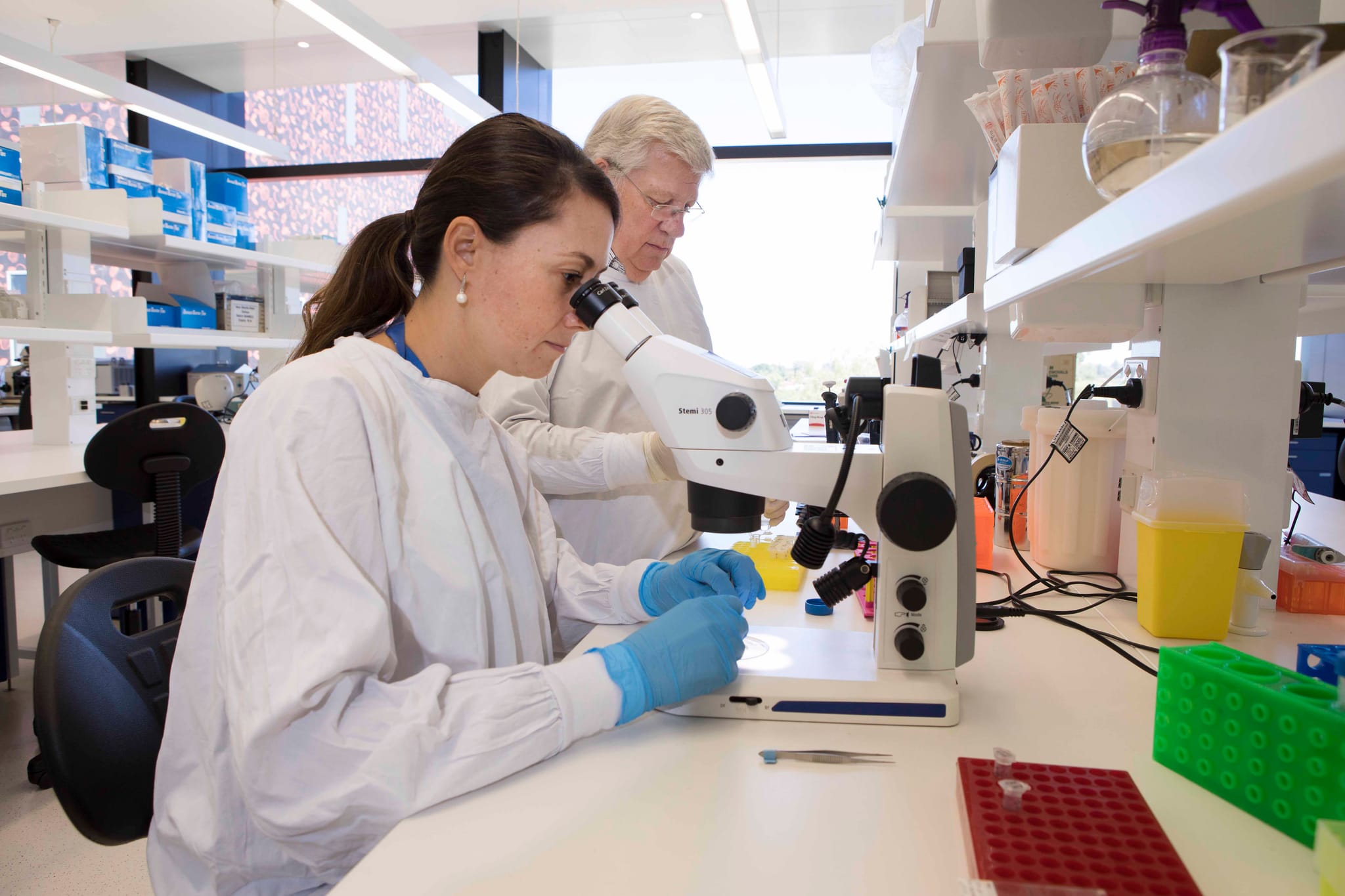
“The only approved prescription gene therapy ‘Luxturna’ works by using a genetically modified safe virus as a delivery tool to transfer DNA of healthy genes into defective cells.
“We tested the same approach in mice that had KCNV2 retinopathy. We used a genetically modified virus to transfer a healthy copy of the KCNV2 gene into the retinas of affected mice, and we found the treatment was successful in improving function of the animal’s retinal cells and restoring vision.”
The research team then successfully tested the approach in lab-grown human retinal organoids created from patients’ stem cells.
“The treatment boosted production of the healthy KCNV2 gene, suggesting it could be effective in human cells and offering hope for future clinical applications,” said co-researcher from the University of Sydney Associate Professor Anai Gonzalez-Cordero.
Bunbury mum-of-three Stacey, is in her 40s and legally blind, diagnosed with a rare inherited eye condition when she was five years old.
Stacey has been part of the Lions Eye Institute study into retinal eye diseases for the past five years.
“I’ve never had a driver’s licence. I can’t read a street sign unless I’m standing directly under it, and the light conditions are right. As I’ve gotten older, reading things has become more difficult.”
“Socially, it’s difficult. I can’t read facial expressions, and I miss a lot of social cues.”
Stacey said it was amazing to see this research coming out of Perth WA, and to know that gene therapies were being developed here.
“It’s exciting that the trials have been successful in mice, and fantastic that they have reached the stage where the gene therapy has the potential to make a difference to people with these rare eye conditions.”
“If it passes clinical trials and can be effective to help people, it will make a huge difference to someone like me, who may be able to gain some sight that I’ve never had.
“It would be life-changing to have gene therapy that could fix your eyesight, or even part of it.”
KCNV2 retinopathy causes progressive vision loss with symptoms typically showing up in early childhood.
As the disease slowly progresses, patients lose the ability to drive, recognise faces, read and eventually see altogether.
The disease affects one in 800,000 people worldwide; however, researchers suspect the condition is underdiagnosed.
Associate Professor Fred Chen, a retinal specialist and Director of Research at the Lions Eye Institute said: “Genetic testing, supported with a characteristic clinical finding, is the only way to confirm whether a patient has KCNV2 retinopathy, but most optometrists and ophthalmologists do not have access to the specialised diagnostic equipment needed to identify the condition or the facilities required to perform genetic testing.”
“This electrodiagnostic test measures tiny electrical signals generated by the retina in response to flashes of light. A fine thread-like sensor is placed on the eyelid while dim and bright light stimuli are presented. The test is performed under both dark-adapted and light-adapted conditions. Patients with KCNV2 retinopathy may show unusually high responses under dark-adapted conditions despite having a reduced cone cell function.”
“We suspect patients with KCNV2 retinopathy remain undiagnosed because not all patients with cone dystrophy are referred for electrodiagnostic and genetic testing. This presents a challenge when identifying suitable patients for future clinical trials, as eligibility will depend on confirmed genetic diagnosis.”
The research, published in Molecular Therapy, provides preclinical proof of concept for both safety and therapeutic potential of the gene therapy.
“Our job as scientists is to find treatments where there are none, so that one day no one is left without options after an eye disease diagnosis,” said Dr Livia Carvalho.
It’s hoped this research will help accelerate progress towards targeted treatment for patients who currently have no options.
The study received $500,000 in funding from Artema Therapeutics and the Medical Research Future Fund (MRFF).
Media Contact:
For media enquiries, please reach the Communications Team at communications@lei.org.au.

