
2026 Miocevich Lecture: Hidden aspects of eye disease
Wednesday, 15 July 2026 – 5:30pm | Proudly supported by the Miocevich family
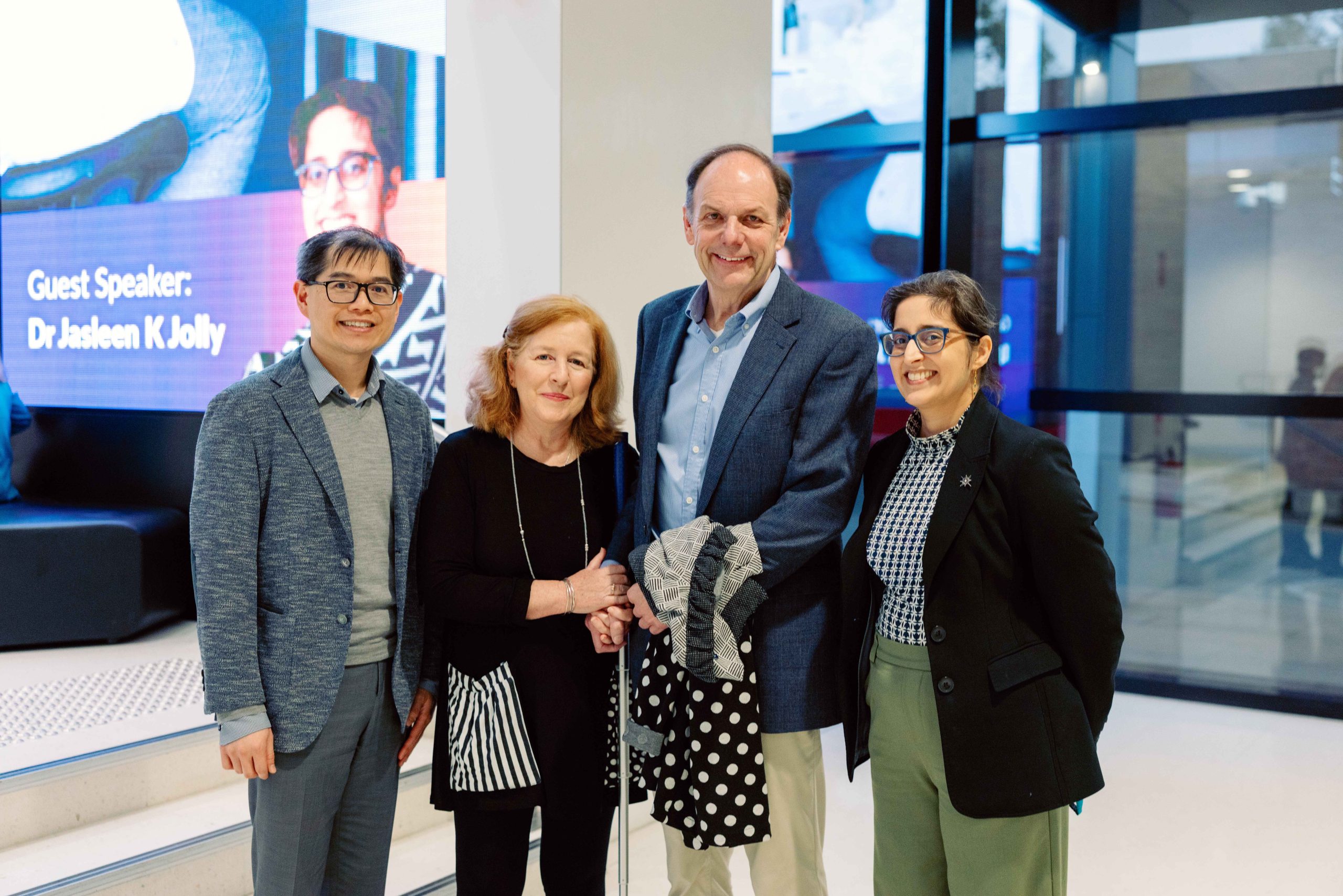
Associate Professor Fred Chen, Carolyn and Brad Miocevich, and Dr Jasleen Jolly
Thank you for joining us for an insightful lecture by Dr Jasleen K Jolly, a clinical academic and Associate Professor in multidisciplinary vision research, based at Jolly Vision Science in the United Kingdom, with an honorary associate professorship at the University of Melbourne.
Understanding Charles Bonnet Syndrome
One of the key topics was Charles Bonnet Syndrome (CBS) – a condition where people with vision loss experience hallucinations. These hallucinations are secondary to the vision loss itself. They happen because the brain is no longer receiving normal visual input, and it responds by creating images that are not really there.
The hallucinations can take different forms:
- Simple hallucinations: flashing lights and geometric shapes
- Complex hallucinations: people, insects, figures, and plants – images that appear strikingly real
How common is it?
CBS can happen to anyone with any degree of vision loss, regardless of age. It is a myth that it only affects elderly people. Yet many eye specialists are not confident managing it – only 20 per cent of ophthalmologists surveyed said they feel prepared to support patients with CBS, and 15 per cent said they had no awareness of it at all.
Importantly, people do not need to lose a huge amount of vision before CBS can develop.
What the research shows
Dr Jolly’s research used brain imaging to study what happens during hallucinations. Every person’s experience was different – the number and type of hallucinations varied greatly. Brain recordings showed that during a hallucination, a pattern called “alpha power” (a marker of visual consciousness) changes in a specific way: it decreases when the hallucination starts and increases again when it stops.
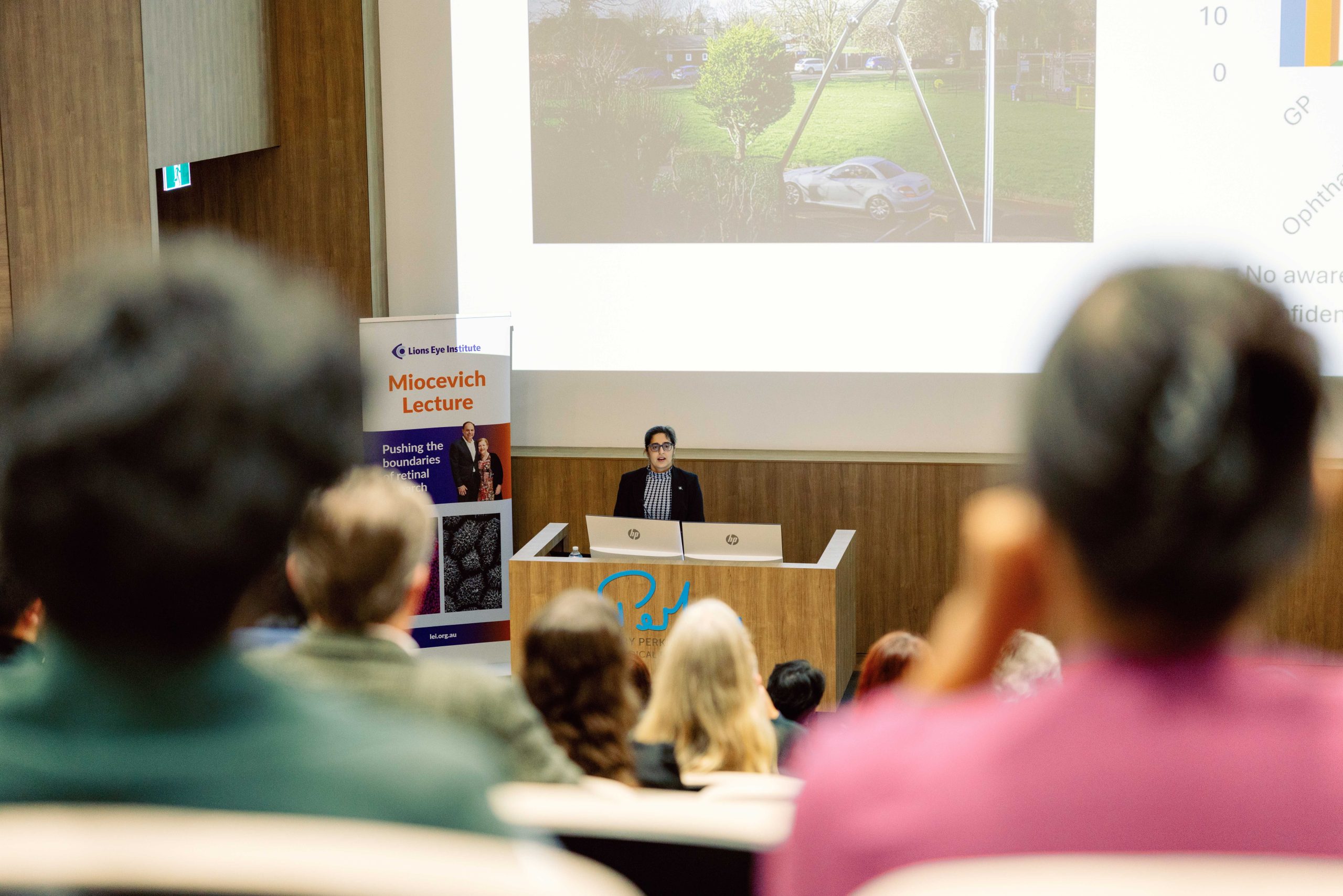
Dr Jasleen Jolly presents at the 2026 Miocevich Lecture
Myths about Charles Bonnet Syndrome
There are several common misconceptions:
- It only happens in older age
- It only occurs with severe vision loss
- It is just a short-term issue
- There is no treatment
None of these are true. CBS can happen at any age and with any degree of vision loss. While the hallucinations don’t last long individually, some people can have symptoms for many years but for many others it can resolve within a couple of years when their vision disease is treated. And there are ways to help.
Supporting people with Charles Bonnet Syndrome
There is no single cure, and medication has not been shown to be effective. However, several approaches can help:
- Interaction: Some people find relief by engaging with the hallucinations (for example, talking to or acknowledging the people they see)
- Acceptance and reassurance: Learning to understand that CBS is a natural response to vision loss, not a sign of mental illness
- Counselling and cognitive behavioural therapy: Professional support to manage the emotional impact
- Screening: Eye specialists can ask simple questions to identify CBS: “Do you see images or people that are not really there? Do you feel your eyes are playing tricks on you?”. Early identification and clear explanation is vital. Many people experiencing hallucinations fear they’re developing a mental health condition. By diagnosing CBS and explaining that these hallucinations are a natural, documented response to vision loss, eye specialists can prevent the anxiety, shame, and social isolation that often result when people misunderstand their symptoms.
People with vision loss should be asked about hallucinations regularly. Diagnosis requires three things: actual vision loss, the person’s understanding that the images are not real, and no involvement of the other senses.
The broader picture: living with vision loss
Charles Bonnet Syndrome is just one of the hidden aspects. The psychological and emotional impact of vision loss is equally important:
- Diagnosis and uncertainty: Living with vision loss means constant adjustment and uncertainty about the future – a journey similar to what cancer patients and patients with other disabilities experience
- Social and identity impacts: Societal discrimination, lower employment rates, and the difficult decision of whether to disclose your vision loss to others. Vision loss often brings a profound change in identity and self-perception
- Mental health: Stress and anxiety linked to vision loss can lead to depression. Social isolation increases the risk of CBS and affects overall wellbeing
Modern technology and assistive devices
There are now many companies, devices and apps designed to help people with low vision – including smartphone apps like “Be my eyes“, travel companies dedicated to holidays for people with vision impairment like “Traveleyes“, and wearable technology like smart glasses and AI-powered devices that read labels. However, many of these tools are expensive and not funded through the national health service. Access remains a barrier.
As Dr Jolly emphasised: “We need to be our patient’s biggest advocate.”
Improving the experience of eye care
Dr Jolly highlighted how the experience of attending an eye hospital matters deeply. Vision testing can be emotionally difficult – people are often told they cannot do the things they want to do. Eye specialists can help by:
- Giving detailed, clear instructions
- Managing expectations realistically, through reassurance that not seeing all lights in a vision test is normal
- Providing breaks during testing
- Offering a quiet recovery area
- Taking time to explain findings
- Using mindful, respectful language
Key takeaways
- Patients are not just patients – they are people with complex experiences, emotions, and needs
- Keep patients at the centre of care – think beyond clinical diagnosis
- Actively screen all patients living with vision loss for Charles Bonnet Syndrome
- Improve the overall experience of attending eye care appointments
- Extend your advocacy beyond the clinic
- Be mindful of language and how we talk about vision loss
- Patient researchers are essential – their lived experience fills critical gaps in research and care
| About the speaker:
Dr Jolly has spent years working on some of the world’s first ocular gene therapy trials at the University of Oxford and Oxford Eye Hospital. She now consults globally to improve clinical trial design, has published nearly 100 peer-reviewed papers, and has been recognised with the NIHR award for Outstanding Research Practitioner and the title of Fellow of the College of Optometrists. |
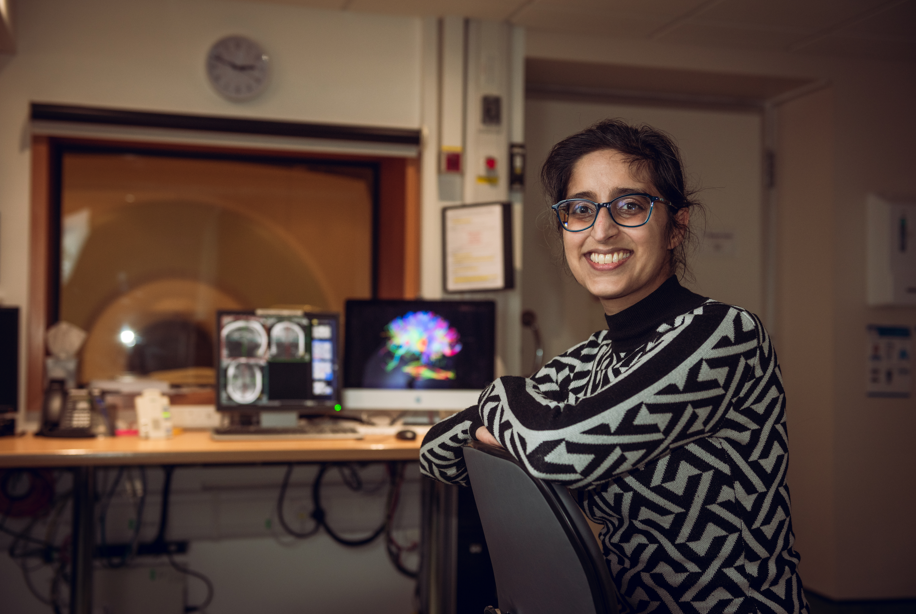 Dr Jasleen Jolly |
For any enquiries, please contact Jade Knapp at fcresearch@lei.org.au or 08 9381 0776.

