
International astronauts visit to explore groundbreaking research
Astronauts from around the world recently visited the Lions Eye Institute to see firsthand the groundbreaking research aimed at improving eye health in space and here on Earth. Among the visitors were renowned Canadian astronaut Dr Shawna Pandya, Australian astronaut Katherine Bennell-Pegg and Japanese astronaut Koichi Wakata, who explored cutting-edge diagnostic tools being developed to combat “astronaut blindness” and other related health concerns in space.
The focus of the discussion was pioneering research by scientists at the Institute, which uses advanced imaging of the eye and analytics to measure pressure exerted on the brain and eyes – an issue astronauts commonly face during extended space missions. This technology could have profound implications for both space exploration and improved medical treatments on Earth.
Professor Bill Morgan, an ophthalmologist and key researcher at the Lions Eye Institute, shared his insights on the importance of monitoring the pressure on astronauts’ eyes. “A major challenge for astronauts is that this fluid pressure cannot be easily measured, making it difficult to know if they are developing spaceflight-associated neuro-ocular syndrome (SANS), or whether treatments are effective,” Professor Morgan explained.
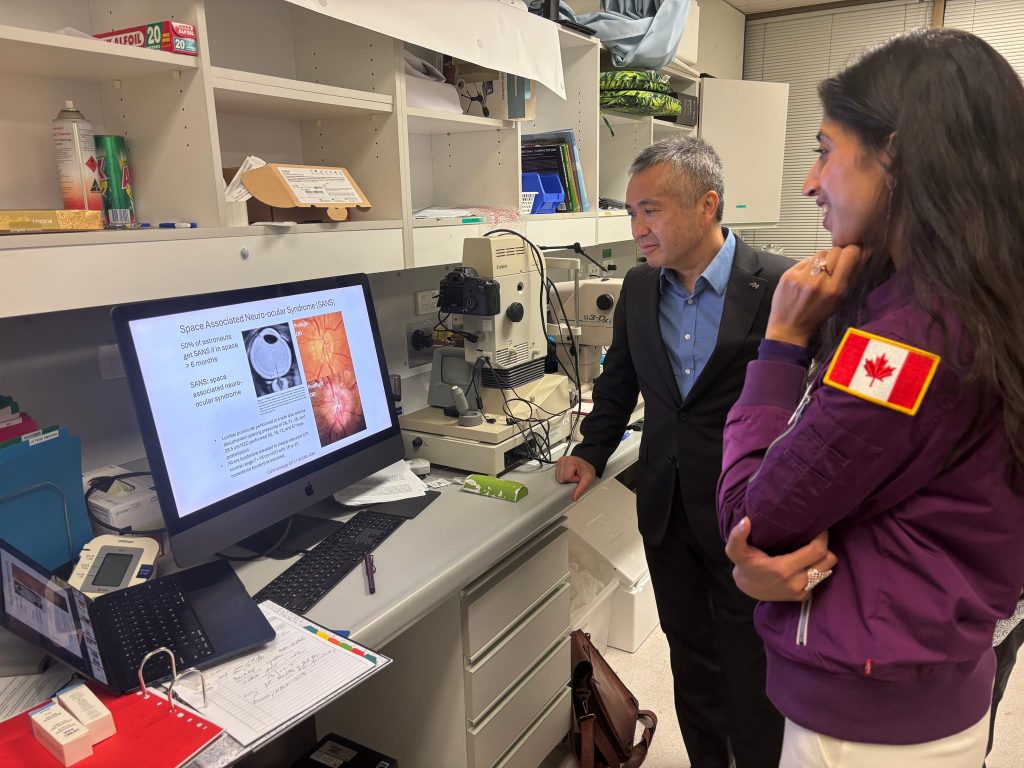
Japanese astronaut Koichi Wakata and Canadian astronaut and physician Dr Shawna Pandya
Astronaut blindness
SANS, sometimes referred to as “astronaut blindness,” is a condition that affects many astronauts who have been exposed to zero gravity for extended periods. It results from fluid shifts in the body that increase intracranial pressure (brain
pressure), causing symptoms such as swelling and, in some cases, vision loss. These effects typically take a long time to resolve once astronauts return to Earth, raising concerns about prolonged exposure to zero gravity and irreversible eye damage.
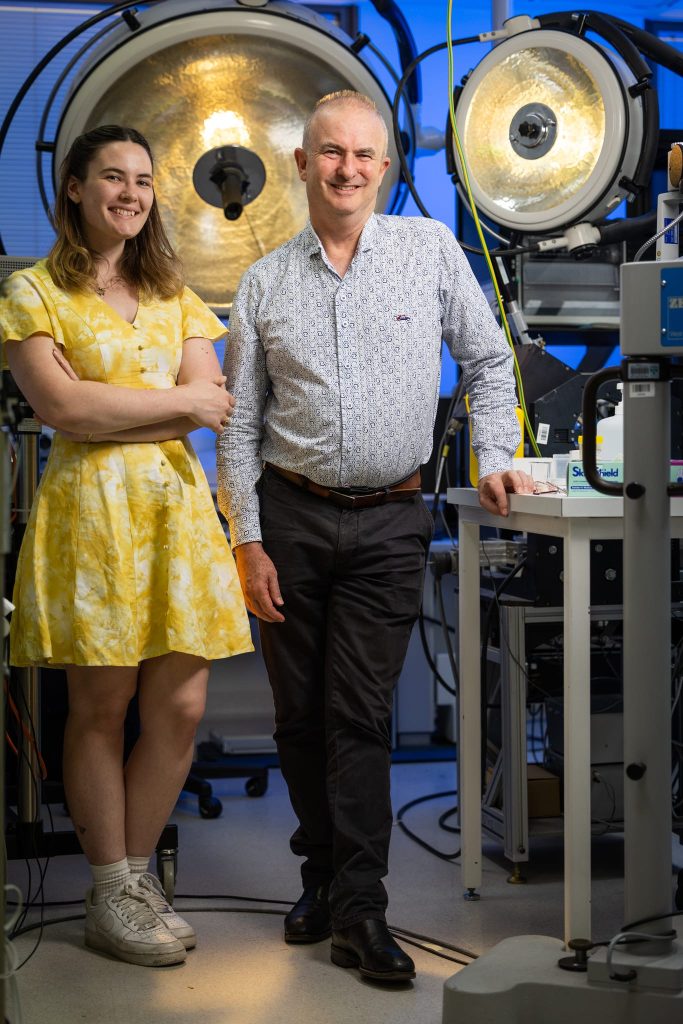
Masters research student Jasmine Quin Conroy and Professor Bill Morgan are among the researchers developing cutting-edge diagnostic tools for treating eye conditions on Earth and in space. Photo credit: West Australian Newspapers Limited
Oculinx invention offers new hope
One of the main goals of this group of researchers at the Lions Eye Institute is to create a non-invasive, reliable method for measuring intracranial pressure – a task previously requiring highly invasive procedures such as lumbar punctures or even skull drilling. The newly developed portable version, known as the Oculinx device, uses a contact lens with a built-in camera that records a person’s retinal blood vessel pulsations, providing real-time data without the need for invasive procedures.
This innovative approach could be a game-changer for both space missions and medical diagnostics here on Earth.
Dr Shawna Pandya from Canada and Koichi Wakata from Japan had the opportunity to experience an exclusive demonstration of the state-of-the-art device. During their visit, Professor Morgan explored its potential applications in space with Dr Pandya, a space medicine physician, while Mr Wakata offered valuable insights into how the technology could function in a zero-gravity environment.
While the Oculinx device is still in its early stages, its development could pave the way for improved diagnosis and monitoring of a wide range of conditions, including idiopathic intracranial hypertension, glaucoma, and hydrocephalus. Professor Morgan emphasised the device’s potential to impact everyday medical care.
‘We believe that building this device with sufficient accuracy, safety, and robustness for space will also make it ready for use in hospitals and clinics for diagnosing and monitoring these conditions.”
Impact in space and on Earth
The Lions Eye Institute’s collaboration with astronauts and space agencies underscores the growing intersection of space exploration and medical innovation. As Perth continues to establish itself as a key player in the global space industry, the research emerging from the Institute is set to make a lasting impact on both human health in space and human health on Earth.
With the ongoing developments in this area, the Lions Eye Institute and its partners, including UWA’s International Space Centre, are paving the way for a future where space research not only enhances our understanding of the universe but also improves health outcomes for people around the globe.

