
Associate Professor Fred Chen, clinician researcher in retinal diseases at the Lions Eye Institute, has dedicated his career to solving the mystery behind inherited retinal diseases (IRDs), the leading cause of youth blindness.
An IRD is a genetic condition that leads to a slow decline in vision. IRDs can manifest at birth but are more commonly diagnosed in childhood. The journey to a diagnosis is often prolonged due to the complex workup, unfamiliar to most clinicians. Currently, there are around 300 genes known to cause IRDs, though there are many more yet to be discovered.
Intense effort over the last decade to fast-track IRD diagnosis has resulted in a large, well-characterised and genetically resolved patient population here in Perth. The next challenge is to find a treatment for all of them.
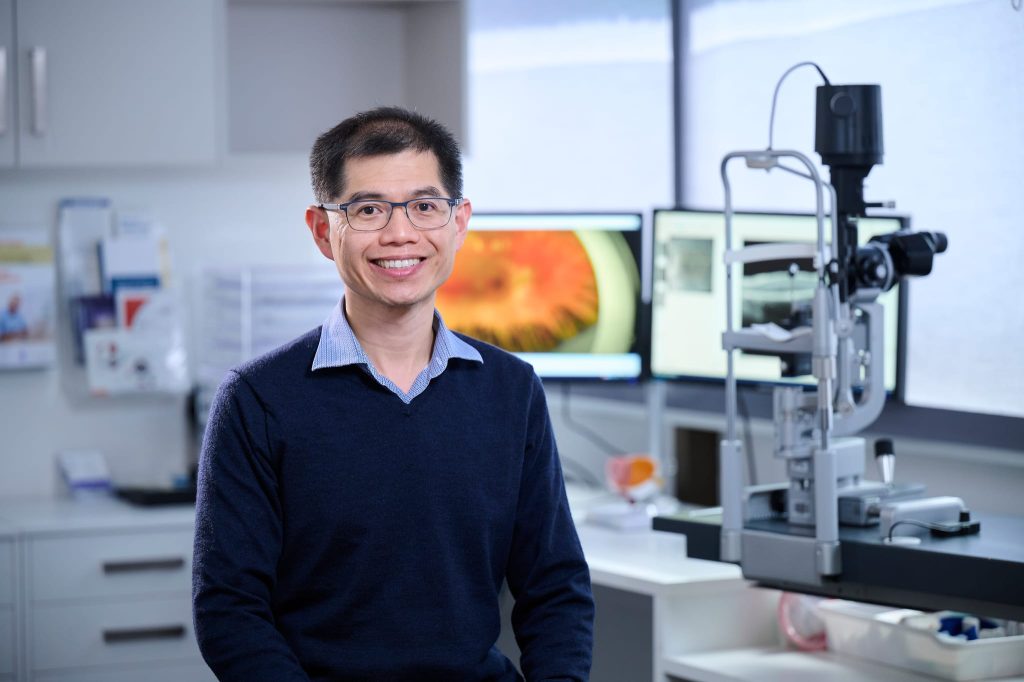
Associate Professor Fred Chen is dedicating his research to finding the causes and treatments for inherited retinal diseases
New drug being trialled
Associate Professor Chen and his team’s research into a drug to treat retinitis pigmentosa type 11 (RP11), a blinding eye disease that begins in childhood and ultimately leads to legal blindness in middle age, led to the exciting discovery of VP-001, a potentially life-changing medicine to treat retinitis pigmentosa. VP-001 is designed to halt the progression of the disease in RP11 patients and enable them to retain their sight.
This research was followed by the commencement of phase 1 human trials in 2023. In 2024, Associate Professor Chen presented encouraging results from this trial at the Association for Research in Vision and Ophthalmology conference, attended by more than 8,000 vision scientists from around the world.
Retinitis pigmentosa 11 clinical trial: Phase 1
Vision Pharma, a joint venture between the Lions Eye Institute and PYC Therapeutics, is the company bringing the VP-001 drug to market.
Following completion of the single ascending dose milestone, PYC conducted a multiple ascending dose study to investigate the safety and durability of the clinical effect observed in the early trial. The phase randomised study is now underway.
Associate Professor Chen and his team have been seeing RP11 patients in the natural history study run by PYC. Once the Food and Drug Administration gives approval, a phase 2 study will commence.
Globally, the treatment can potentially save 150,000 people from loss of vision once shown to be effective in clinical trials, bringing hope to those diagnosed with RP11.
This is the first treatment of its kind to reach human clinical tests for retinitis pigmentosa.
Philanthropy is propelling this research forward
Philanthropic supporters, government grants and other grant funding have played a critical role in this groundbreaking scientific work. Philanthropic supporters include:
- Bowen Foundation
- Channel 7 Telethon Trust
- Constantine Family Foundation
- Norman and Freda Hogg
- McCusker Charitable Foundation
- Brad and Carolyn Miocevich
- John and Lee Saleeba
- Rhonda Wyllie
If you would like to help support our ongoing research projects, please click here.

