
Inherited retinal diseases (IRDs) are a group of genetic disorders that affect the retina, which is the light-sensitive layer at the back of the eye responsible for vision. Collectively, these conditions affect around one in 2,000 people worldwide and are the leading cause of blindness in working-aged adults and one of the leading causes for childhood blindness in industrialised countries. In Australia alone, an estimated 19,000 people live with an inherited retinal disease.
Despite their impact, treatment options remain extremely limited. More than 500 genes have been linked to IRDs and currently there is only one approved therapy (Luxturna) for patients affected by defects in only one of the genes. This highlights the urgent need to develop new treatments that can benefit a wider group of patients.
At the Lions Eye Institute, the Retinal Genomics and Therapy Laboratory, led by Dr Livia Carvalho, is working to better understand the mechanisms that drive these diseases and to develop new therapeutic strategies to slow or prevent vision loss. Supported by the Stan Perron Charitable Foundation, the team focuses on IRD conditions such as retinitis pigmentosa, Usher syndrome, achromatopsia, Leber congenital amaurosis and KCNV2-retinopathy (a rare form of IRD).
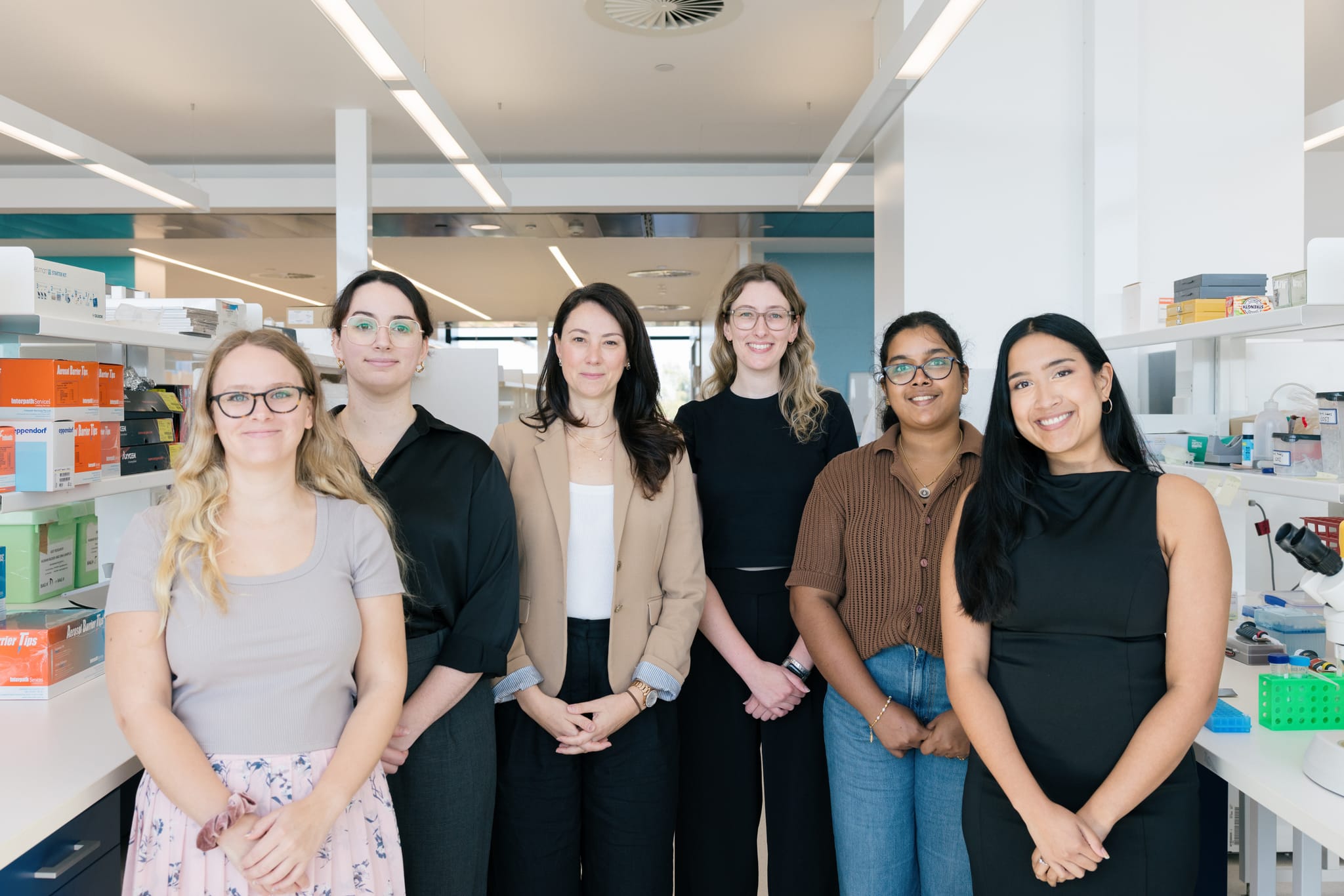
Dr Annie Miller, Kate Gilbert, Dr Livia Carvalho, Rebekah James, Miya Sandesh, Dr Alicia Brunet (left to right) from the Retinal Genomics and Therapy Laboratory
These diseases are primarily characterised by the loss or dysfunction of photoreceptors; the specialised light-sensing cells in the retina that enable vision. As these cells degenerate, patients experience progressive visual impairment that can eventually lead to blindness.
One promising avenue of research being explored by the laboratory is the development of gene-independent therapies.
Dr Carvalho said “Inherited retinal diseases are genetically complex, but our research is identifying many shared common pathways of degeneration that we can target therapeutically.”
Unlike traditional gene therapies that target a specific mutation or gene, gene-independent approaches aim to protect photoreceptor cells regardless of the underlying genetic cause. These strategies focus on common biological pathways shared across the different types of IRDs, including activating cellular survival pathways and inhibiting those that lead to cell death. By targeting shared disease mechanisms, these treatments have the potential to benefit a much broader group of patients living with inherited retinal diseases.
What is a gene-independent therapy?
Unlike traditional gene therapies that target a single faulty gene, gene-independent treatments aim to protect retinal cells by targeting common disease pathways. This approach could benefit many patients regardless of the genetic cause of their disease.
Progress in 2025
Recently, the team has identified key molecular targets linked to cellular metabolism within degenerating photoreceptors.
These findings are particularly significant because photoreceptors are among the most metabolically active cells in the human body, and disruptions to their energy pathways are increasingly recognised as a major contributor to retinal degeneration.
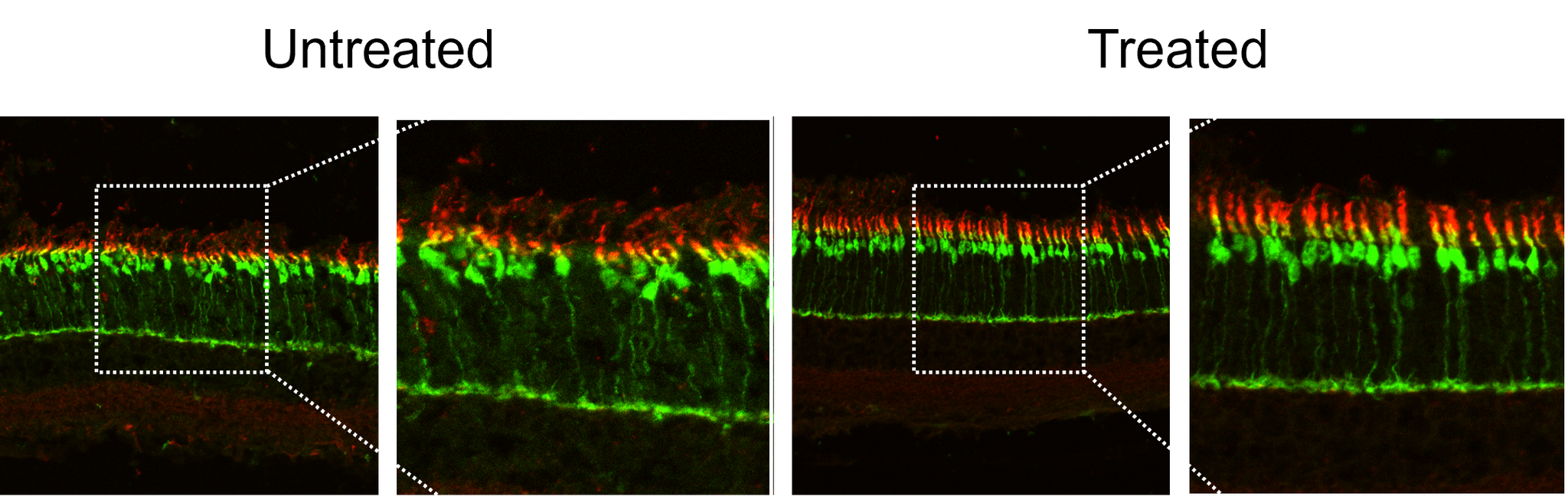
Fluorescence microscopy images of cone photoreceptor cells from IRD mouse retinas that were untreated (left) or treated (right). Treated retinas displayed healthier looking cone cells. Photo credit: Dr Annie Miller
Furthermore, in 2025 the research team published a study that has identified important biological differences between autosomal dominant and autosomal recessive forms of retinitis pigmentosa, providing insights that may help guide the development of more efficient treatments.
Building on these discoveries, the laboratory has also begun testing commercially available neuroprotective drugs for conditions such as retinitis pigmentosa and achromatopsia. Because these drugs have already been developed and characterised, they offer an opportunity to accelerate the pathway from laboratory research to clinical trials for patients with inherited retinal diseases.
Alongside the work on gene-independent approaches, the laboratory is also advancing gene-replacement therapies for specific conditions. Recent efforts have focused on developing gene therapies for PDE6C-associated achromatopsia and KCNV2-retinopathy, two rare inherited retinal diseases that significantly impact vision.
In the case of KCNV2-retinopathy, the gene therapy treatment was able to restore visual function in disease models and is currently moving ahead with safety evaluations, which is the final stage before clinical trials can commence.
Together, these advances are helping to build a deeper understanding of inherited retinal diseases and opening new possibilities for treatments that could preserve vision for thousands of people affected by these conditions.

