

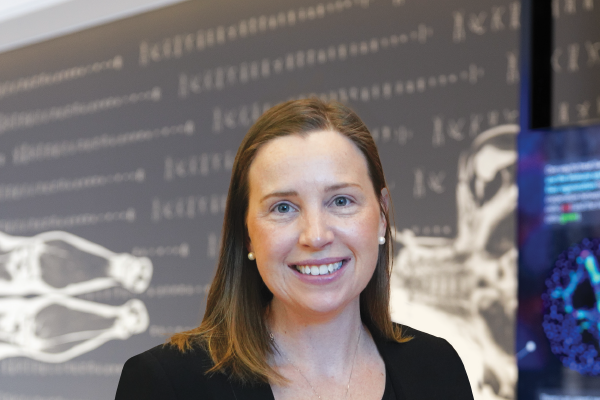
Associate Professor Holly Chinnery
The Lions Eye Institute and The University of Western Australia are delighted to announce the appointment of Associate Professor Holly Chinnery as the inaugural Ian Constable Research Fellow.
An internationally renowned expert in the field of corneal inflammation, Associate Professor Chinnery completed her PhD at The University of Western Australia and subsequently conducted postdoctoral research at the Lions Eye Institute and Monash University.
The Lions Eye Institute’s Managing Director, Professor Bill Morgan said the appointment would bolster research capacity and further strengthen the Institute’s position at the forefront of sight saving research. “Associate Professor Chinnery will build on and expand her research activities at the Lions Eye Institute to build a corneal ocular surface platform and team. Her research will bridge the gap between basic immunology science at the Institute and enhance clinical translation.”
Associate Professor Chinnery said her work aims to understand how the corneal nervous and immunological systems interact in the context of homeostasis, inflammation, injury, and neurodegenerative diseases.
“Corneal immunology is a fascinating field that explores the intricate interactions between the immune system and the cornea – the transparent front surface of the eye,” she said.
“My research program uses preclinical models to investigate fundamental ocular immunology and explore novel therapies for corneal neuropathy and inflammation. Ultimately, the aim is to model conditions that affect the human ocular surface to improve and develop new treatments for patients whose sight has been lost to corneal disease, surface diseases, dry eyes, and allied conjunctival pain syndromes.”
Associate Professor Chinnery will assume her position in April this year at the Lions Eye Institute and will also hold an appointment dedicated to research and teaching at the UWA Optometry School.
“The ambitious goal to further augment the Lions Eye Institute’s understanding of a varied range of eye disorders through cutting-edge research informed the decision to create two prestigious Ian Constable Research Fellow positions. Active recruitment is ongoing to fill the second of these posts,” said Professor Morgan.
A paradigm shift in our understanding of the ocular immune system
The unparalleled discoveries of Associate Professor Chinnery’s research has firmly established her as a leader in the field of immunology. Recognised as a ‘paradigm shifter’ for her groundbreaking discoveries and inventions, Associate Professor Chinnery revolutionised the understanding of immune cells in the cornea, laying the foundation for a world-first research platform at the Lions Eye Institute that transcends traditional research boundaries.
Recognised by her peers and the industry for her transformative discoveries, Associate Professor Chinnery, together with her collaborators Professor Laura Downie and Professor Scott Mueller at the University of Melbourne and the Doherty Institute respectively, were the first to uncover multiple identities of immune cells in the cornea – overturning the long-held belief that only a simple immune system existed and that T cells were absent in this part of the body.
Their discovery, published in the prestigious Proceedings of the National Academy of Sciences, rewrote the dogma of the immune status of the cornea and not only advanced basic immunology but also transformed clinical practices for corneal transplants, and other systemic diseases such as multiple sclerosis, motor neurone disease, stroke and diabetes, potentially leading to improving outcomes for countless patients globally. This landmark paper, reviewed by leading immunology experts, has opened new frontiers in basic immunology research and challenged long-held assumptions about the immune status of the cornea.
Powering transformative advances
By studying how immune cells behave within the eye, we can inform future clinical trials of novel drugs to treat eye diseases.
Associate Professor Chinnery’s contribution to this unique research platform, which involves corneal immune cell imaging and their world-first invention, positions her team at the Lions Eye Institute at the forefront of both immunology and precision medicine, driving transformative progress in healthcare.
This pioneering work laid the foundation for a world-first platform in dynamic corneal imaging at the Lions Eye Institute. The unique platform enables Associate Professor Chinnery to explore the entire spectrum, from basic science projects all the way through to clinical translation, where treatments can be monitored for effectiveness. This innovative patient approach drives precision, personalised medicine for a wide range of conditions, from eye diseases like age-related macular degeneration (AMD) and myopia to systemic conditions that are known to have an underlying inflammatory or neurodegenerative basis, like motor neurone disease.
Associate Professor Chinnery’s research is shaping the future of clinical trials and patient care, where her contributions continue to drive transformative progress in healthcare. We are thrilled to welcome Associate Professor Chinnery to the Lions Eye Institute and look forward to the impact her work will have on improving outcomes for people at risk of vision loss in Australia and around the world.
Acknowledging our supporters
This research position was made possible thanks to the generous supporters of the Lions Eye Institute. Your commitment to advancing medical research is the driving force behind our ability to pursue new treatments for inflammatory eye diseases. With your support, Associate Professor Chinnery’s team is working to develop breakthroughs that have the potential to change lives.
Download the article published in Post Newspapers. Included with permission.

