
Monitoring pressure around the brain (known as intracranial pressure or ICP) is essential for managing a range of neurological conditions.
Traditionally, the ‘gold standard’ for measuring ICP requires invasive methods like lumbar punctures or neuro-surgical implantation of a sensor into the brain, which can cause discomfort, infection and trauma, particularly for patients who need regular monitoring. Consequently, clinicians often face a ‘detection gap,’ where subtle neurological changes often go unnoticed because the risks of invasive testing are deemed too high.
To address this issue, the Lions Eye Institute has developed OcuLinx™, a groundbreaking non-invasive device that measures ICP through a simple eye scan. By analysing the tiny pulsations in retinal blood vessels, OcuLinx™ provides a ‘window into the brain,’ enabling doctors to monitor brain pressure without needles or surgery. Previously, with the support of the WA Government’s Future Health Research and Innovation Fund, the technology was advanced from a benchtop system to a portable prototype.
This advancement could significantly reduce the need for invasive procedures, improving the quality of life for patients with chronic conditions.
A year of progress
In 2025, the OcuLinx™ technology reached significant milestones, including:
- Clinical trial of a portable prototype: The portable OcuLinx™ prototype is being tested in a proof of concept clinical trial with a growing number of participants.
- Paediatric research: With support from the Channel 7 Telethon Trust, a dedicated paediatric arm of the trial was launched, offering a safer, less traumatic option for young patients. For children who need regular ICP monitoring, this non-invasive scan could be a life-changer, reducing the stress and discomfort associated with traditional methods.
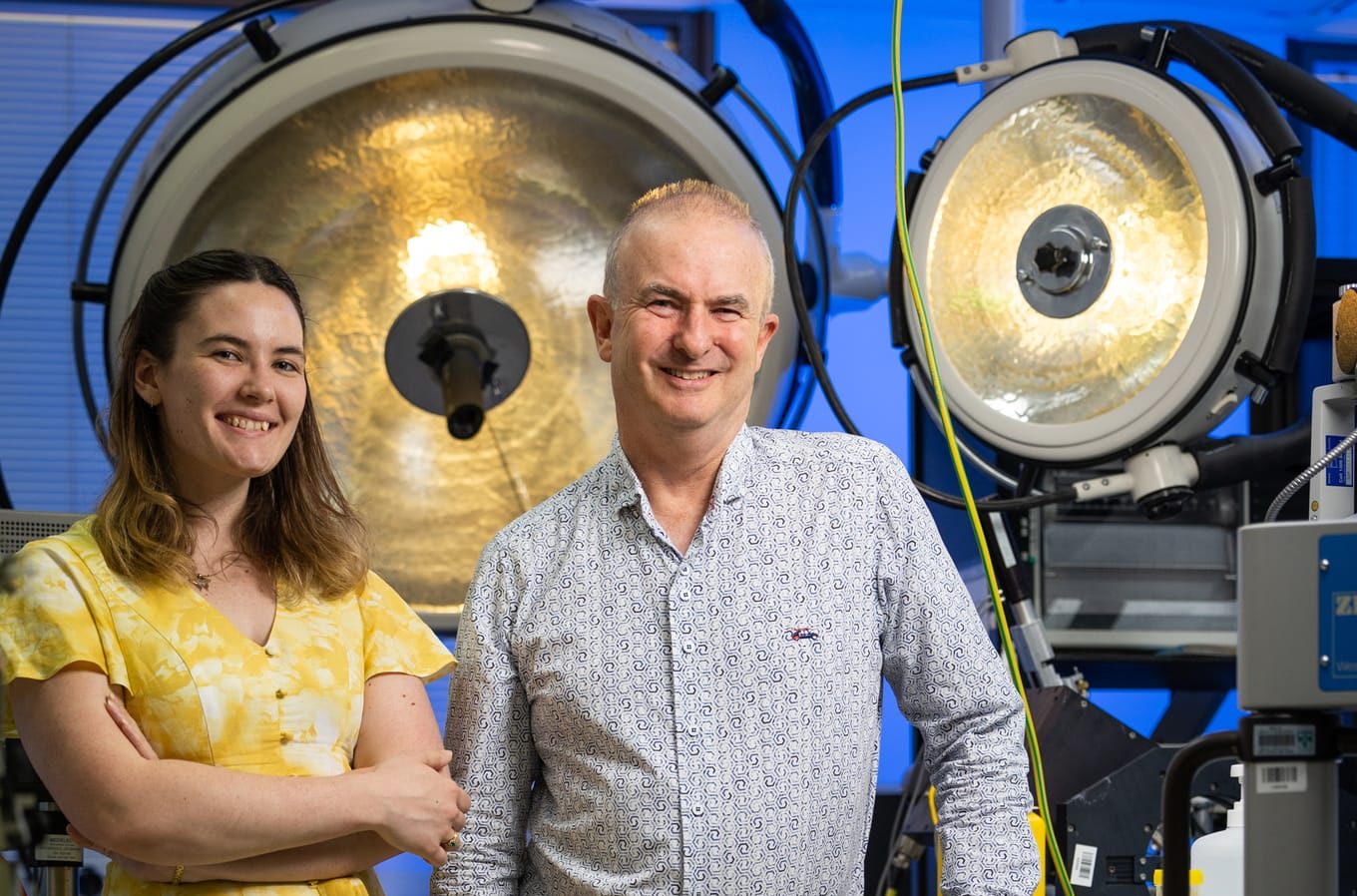
Masters research student Jasmin Quin-Conroy and Professor Bill Morgan are both developing the OcuLinxTM technology, which has applications both on Earth and in Space. Photo credit: West Australian Newspapers Limited
Bridging Earth and Space
While OcuLinx™ has shown immense potential in diagnosing and monitoring neurological conditions on Earth, the technology also has exciting applications in space. Astronauts are prone to a condition known as spaceflight-associated neuro-ocular syndrome (SANS), sometimes called ‘astronaut blindness,’ which is thought to be due to increased ICP in zero gravity. This condition can lead to vision alteration and swelling, which may take months to resolve once astronauts return to Earth.
Professor Bill Morgan, a key researcher at the Institute, emphasised the dual benefits of this technology, saying, “Building a device that works in space ensures that it is robust and clinically accurate on Earth.”
This important clinical device has been developed because of 20 years of extensive research in the Physiology and Pharmacology Group at the Lions Eye Institute.
Future development
As OcuLinx™ continues to progress through clinical trials, the future for this non-invasive ICP monitoring system looks bright. With the potential to improve the care
of patients who may have one of several neurological conditions, OcuLinx™ could revolutionise the way we monitor intracranial pressure, offering a less invasive, more accessible option for patients around the world.

