

Dr Gareth Lingham, postdoctoral research fellow at the Lions Eye Institute, recently explored an important question in myopia management: how should we stop treatment without triggering a rebound in eye growth?
In his work, Dr Lingham highlights that when some myopia-control therapies — like atropine eye drops or repeated low-level red light therapy (RLRL) — are stopped suddenly, children’s nearsightedness can sometimes worsen faster than it would have naturally. This is known as the rebound effect.
Dr Lingham notes that while tapering takes extra time and cost, it can protect the progress already made in slowing myopia — a small price to pay for long-term benefits.
Understanding rebound and tapering strategies helps us support patients and families with the safest, most effective myopia management. Dr Lingham’s work is an important reminder that how we stop treatment is just as important as starting it.
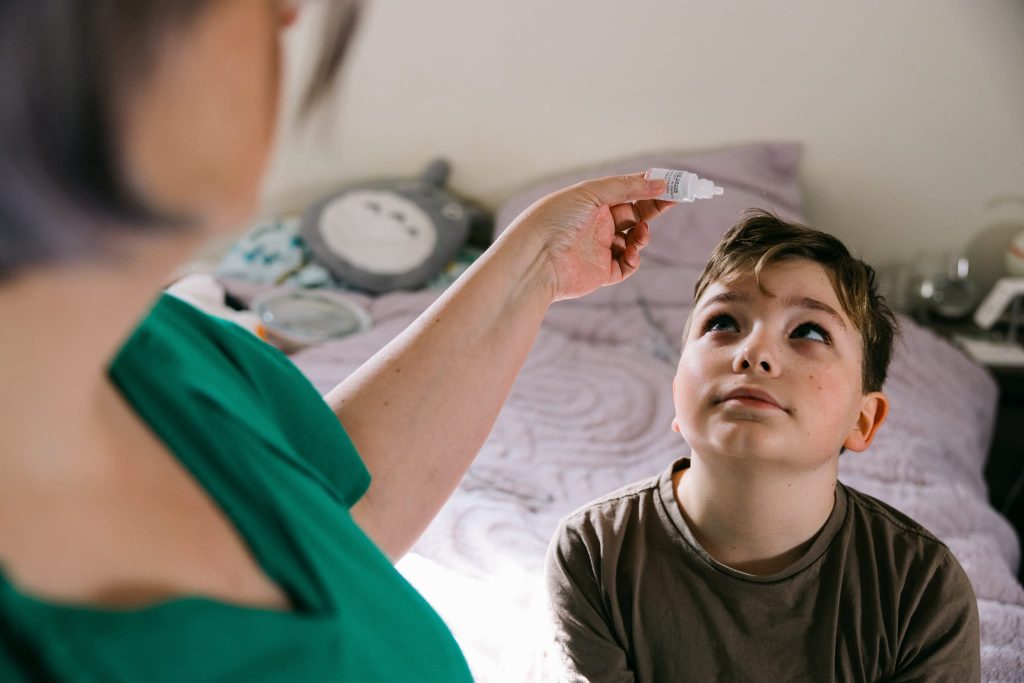
A child receiving eye drops to treat myopia.
Key insights from his research:
-
Atropine drops: Higher doses show a stronger rebound risk, but even low doses (0.01%) may sometimes lead to faster eye growth. Gradually reducing the dose or frequency (tapering) may help reduce rebound.
-
RLRL therapy: Stopping suddenly can accelerate myopia progression, though more studies are needed to confirm tapering benefits.
-
Optical treatments (special contact lenses or glasses): Generally show minimal rebound, so tapering is often unnecessary.
Read more about Dr Lingham’s research here.
If you would like to help support our ongoing research projects, please click here.

