
Usher syndrome is a rare inherited condition that robs children of both their hearing and sight – combining hearing loss with retinitis pigmentosa, a progressive deterioration of the retina, and in some cases a loss of balance.
It affects approximately one in 6,000 people worldwide and is the leading cause of deafblindness. At the moment, there are no approved treatments, making the research underway at the Lions Eye Institute all the more important.
A team effort
| The Institute’s approach to usher syndrome brings together clinical care, laboratory research, and cross-institutional collaboration. Associate Professor Fred Chen, Director of Research at the Institute, leads the Western Australian Retinal Degeneration (WARD) study, which facilitated genetic testing of 48 usher syndrome patients through the Australian Inherited Retinal Diseases Registry, and provided clinical monitoring and a pathway into future clinical trials. Because hearing loss typically appears before vision symptoms, the Institute’s close partnership with Ear Science Institute Australia is helping to identify children with the condition earlier. |
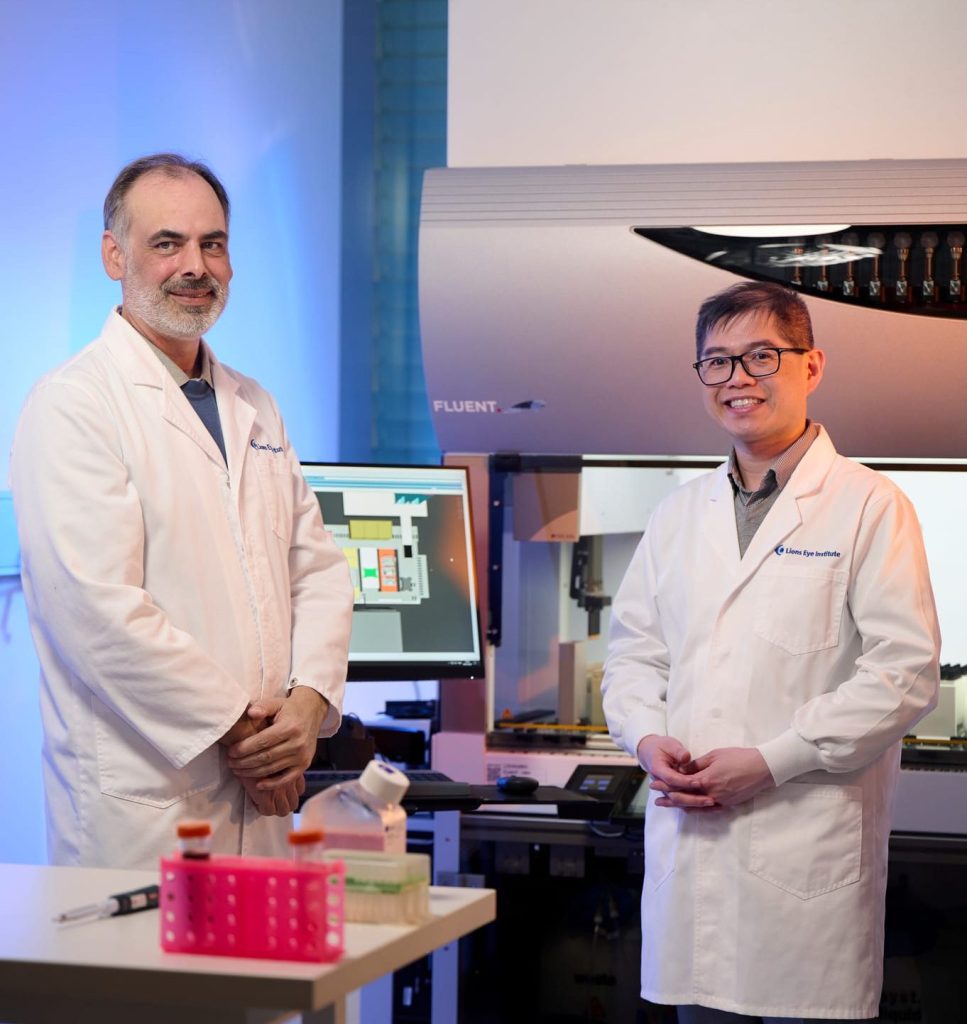 Dr Samuel McLenachan and Associate Professor Fred Chen with the stem cell robot |
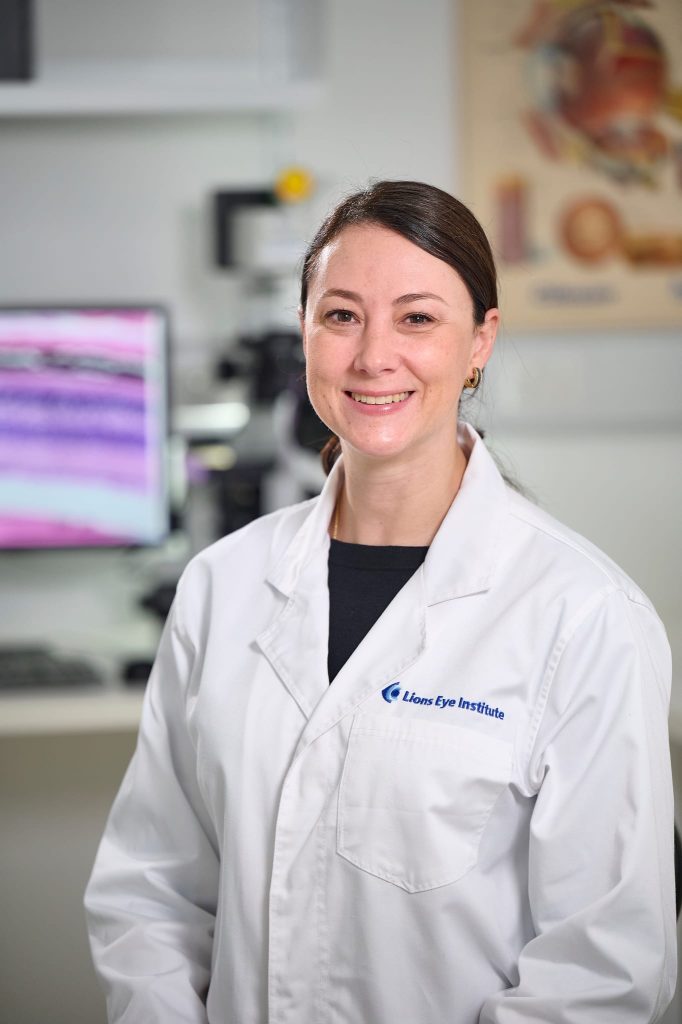 Dr Livia Carvalho |
In the laboratory, Dr Samuel McLenachan and the Ocular Tissue Engineering Laboratory team use the Institute’s stem cell robot to reprogram cells from usher syndrome patients, helping researchers understand the mutations driving the disease and screen potential treatments. Dr Livia Carvalho‘s Retinal Genomics and Therapy Laboratory adds another dimension – developing gene-independent therapies that target shared disease pathways, meaning treatments could one day benefit patients regardless of their specific genetic mutation.
Together with researchers from The University of Western Australia, Curtin, and Murdoch University, this ecosystem gives the Institute the reach to move from discovery science to clinical trials faster than any single team could alone. |
Promising steps forward
Lions Vision Trials recently participated in the Nacuity C18-04 study – one of the only clinical trials for the vision loss associated with usher syndrome conducted in Australia. The trial tested NPI-001, an oral tablet designed to protect retinal cells by reducing oxidative stress. Results were encouraging: NPI-001 slowed photoreceptor loss by more than 50 per cent over two years, and participants experienced a nearly 30 per cent slower loss of visual function compared to placebo. Nacuity plans to launch a confirmatory study in 2026, and the Lions Eye Institute intends to take part.
Why collaboration matters
Usher syndrome is rare, complex, and currently without a cure. The work happening across the Institute means that people living with the condition have access to world-class care, emerging therapies, and researchers who are committed to finding answers.
This Medical Research Giving Day, your support provides hope.

