

Visual snow syndrome is a neurological condition that affects how people see. Those with visual snow syndrome experience constant tiny flickering dots across their vision, a bit like watching the world through static. Many people also notice other unusual visual symptoms.
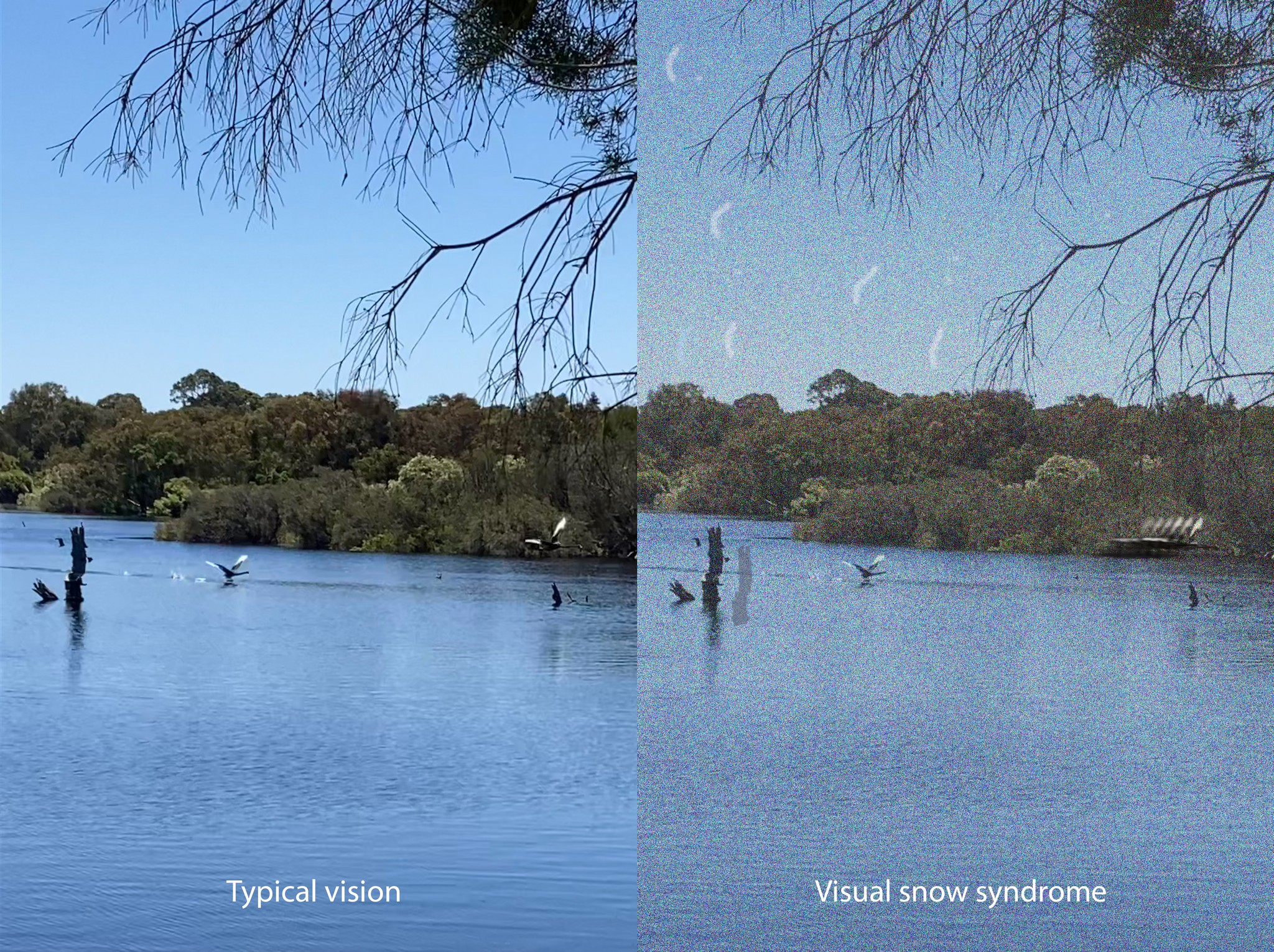
An illustration of how people with visual snow syndrome experience vision. Typical vision is depicted on the left, while the right illustrates some key visual symptoms of visual snow syndrome. These include visual snow (dots throughout the image), persistent afterimages (e.g. a shadowy copy of a dead tree), trailing of images behind moving objects (e.g. a swan in flight) and prominent floaters (dots and squiggles, most noticeable against bright backgrounds like the sky).
Over the past ten years, visual snow syndrome has gained greater recognition and research interest, leading to its formal inclusion in the International Classification of Diseases (ICD 11) in 2025. Despite this progress, many health professionals are still unfamiliar with the condition, which can make it hard for people with visual snow syndrome to get timely and appropriate care.
In 2025, the team has begun dedicated visual snow research at the Lions Eye Institute. Professor Allison McKendrick was joined by Dr Cassandra Brooks, her former PhD student from the University of Melbourne, whose doctoral research focused on visual snow syndrome.
Working with colleagues at the University of Melbourne, the team is aiming to improve awareness and understanding of visual snow syndrome among optometrists across Australia and conduct research into the brain mechanisms involved in the condition.
In 2025, the team has contributed to the field by writing an invited review on the current state of visual snow research for the prestigious, invitation only journal Annual Reviews of Vision Science.

